Nocturne
A dark-first, glass-morphic Flutter NFT-marketplace UI kit — eight wired-together screens on Riverpod and go_router, built to look like a funded product rather than a template.
Most Flutter UI kits are a Material Design demo with the colors swapped. Nocturne is built the other way around — dark-first and glass-morphic, designed to look like a real, funded marketplace from the first screen rather than a template someone will have to redesign before showing a client.
Eight screens, not eight components
Home, Item Detail, Collection Listing, Search, Creator Profile, Cart, Wallet-Auth, and Account Settings — the complete flow a marketplace actually needs, already wired together with real navigation instead of static mockups you have to connect yourself.
The frosted-glass toolkit
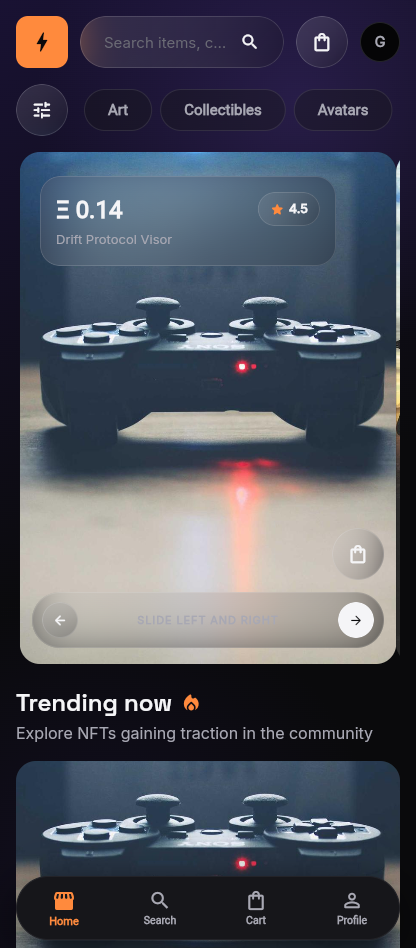
A small set of primitives — `GlassSurface`, `GlassIconButton`, `GlassButton`, and a rating badge — applied consistently across the header, hero card, category pills, and every card action. Consistency at that level is the difference between a kit that looks expensive and one that looks generated.
Genuinely responsive, not a stretched phone layout
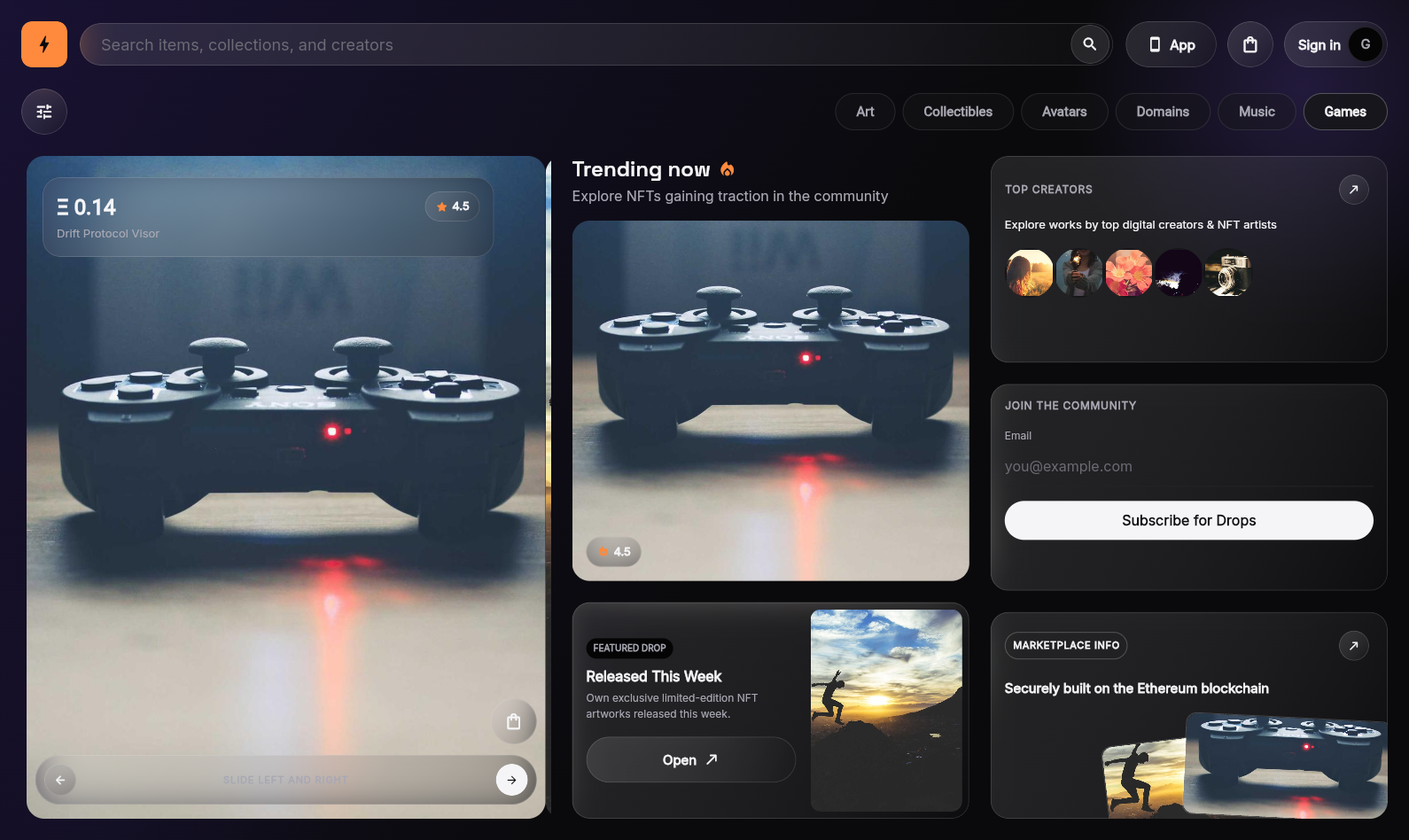
Below 768px the app uses a native-feeling floating pill bottom nav. Above it, the same screen reflows into a real desktop grid: hero column, trending rail, and a right sidebar carrying Top Creators, Join the Community, and Marketplace Info. Same code, two correct layouts — not one layout apologising for the other.
Architecture
- Riverpod for state — typed, testable providers instead of scattered setState calls.
- go_router with a StatefulShellRoute for the tab shell, deep-linkable routes, and an auth-aware redirect guard.
- Feature-first structure: marketplace-home, item-detail, cart, wallet-auth and the rest each own their `presentation/{screens,widgets,providers}`. Delete a feature, delete a folder.
- Freezed domain entities for listings, creators, and collections — immutable, type-safe models instead of raw JSON maps drifting through the app.
- Every color, radius, and shadow traces to a single token file, so reskinning for a client is editing values rather than hunting hardcoded hex across sixty widgets.
A mock backend with documented swap points
The kit runs fully functional with zero backend — seeded JSON catalog data and a mock auth/wallet flow — but every data access goes through a repository interface. Point `catalogRepositoryProvider` at a real API and every screen keeps working, untouched.
The quality bar
Zero analyzer issues. The suite covers unit tests (formatters, validators, cart math), widget tests for every shared UI primitive, an end-to-end smoke test across Home → Item Detail → Cart, and golden tests locking the visual primitives in both themes — so a redesign pass can't quietly break the pixels a buyer paid for.
Built for
Freelancers and agencies who need a marketplace-grade dark UI fast, indie teams prototyping a digital-collectibles product, and anyone tired of retrofitting a generic admin template into something meant to feel premium.
Stack
Screenshots