Sundry
A colorful retro-pixel marketplace app for buying, selling, and boosting indie-made goods — Deno + Fresh islands, Tailwind, and a mock-but-swappable backend seeded from JSON.
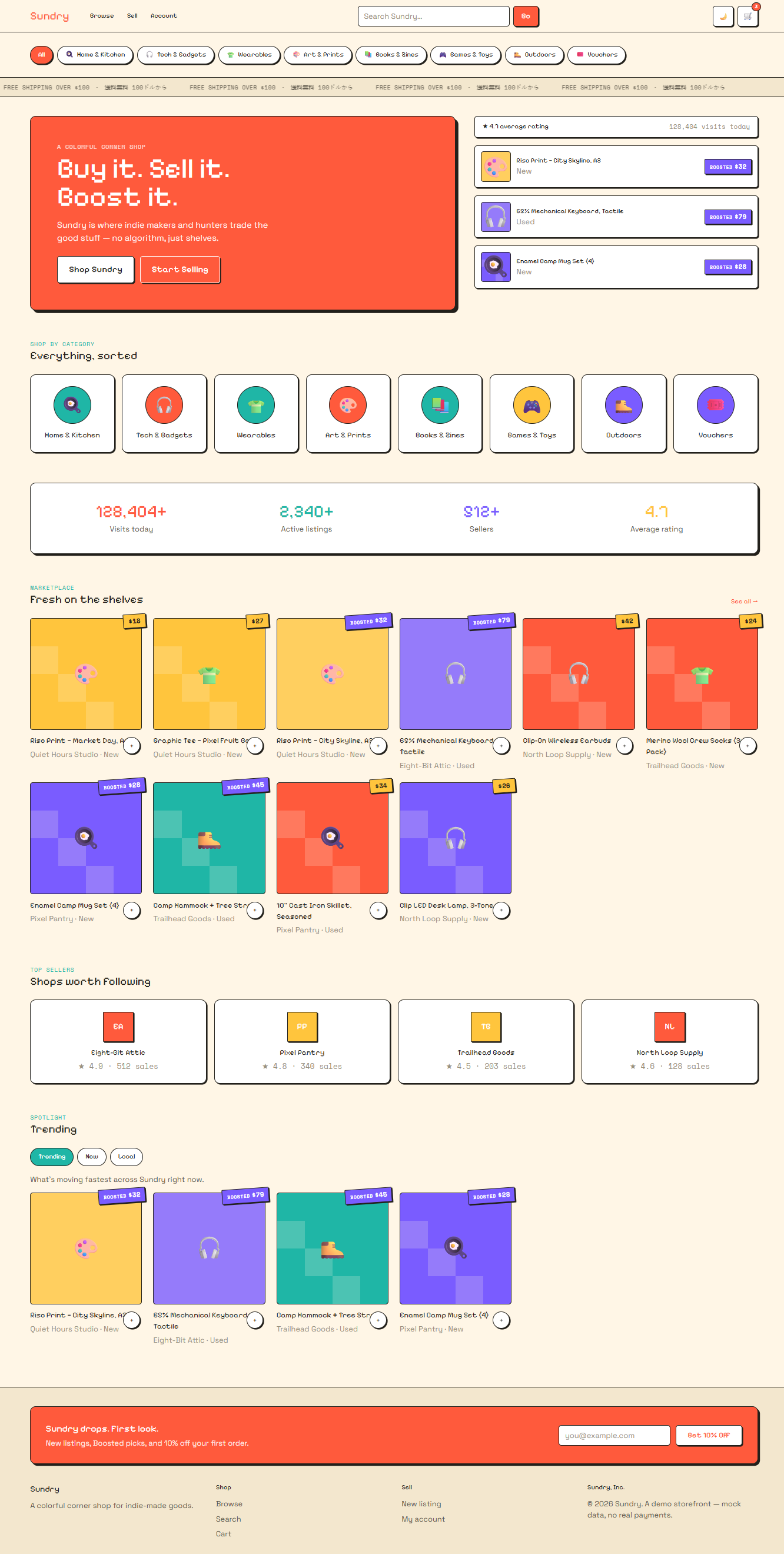
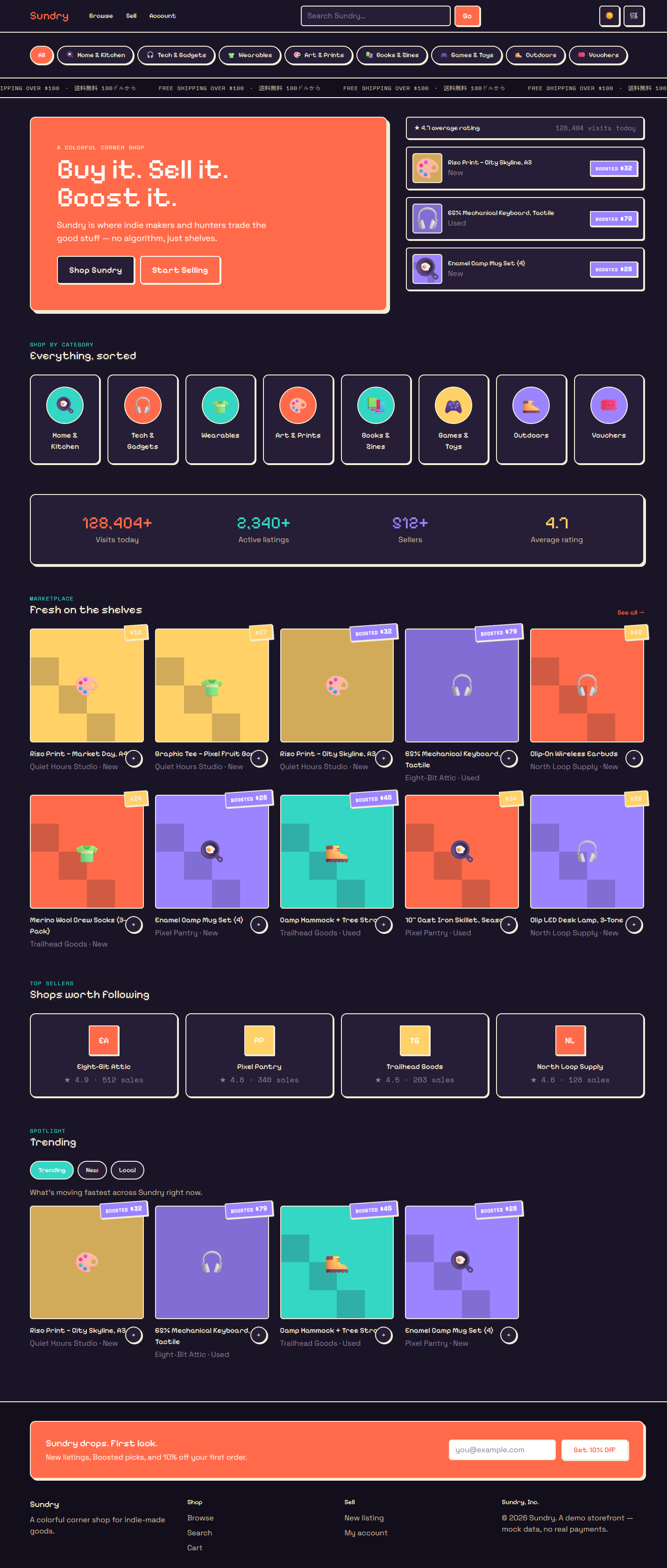
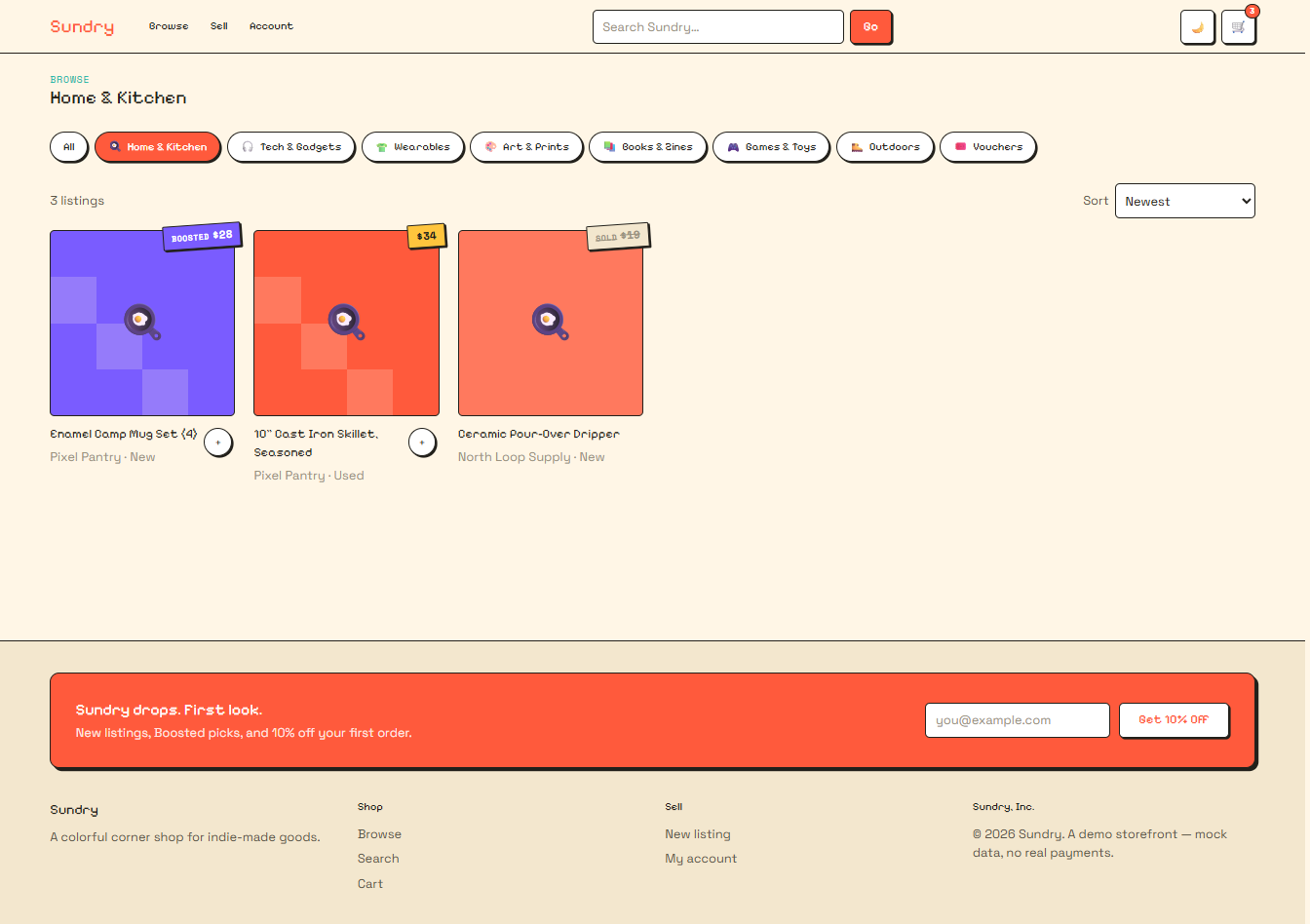
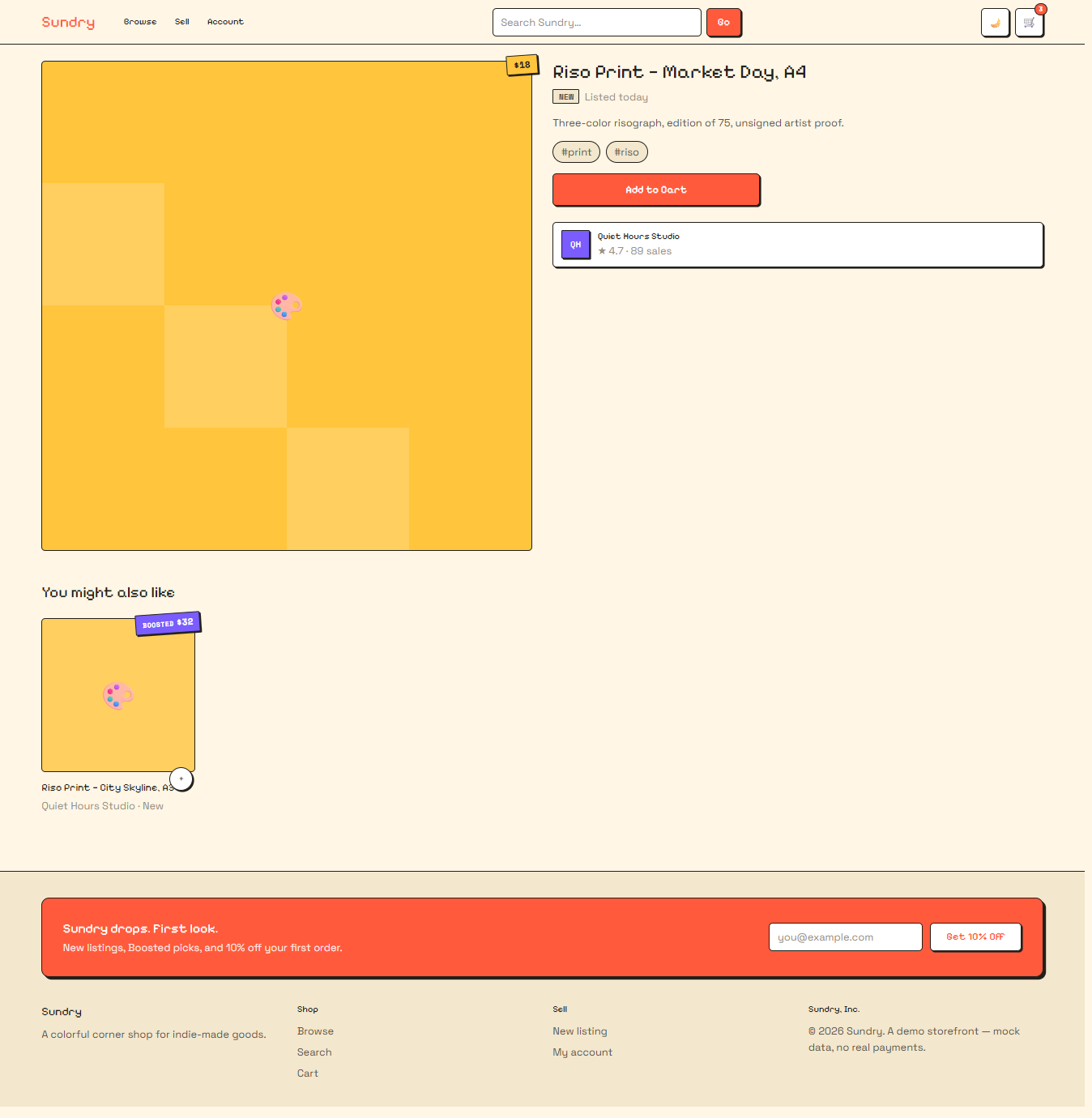
Sundry is a complete two-sided marketplace — browse, search, product detail, cart and mock checkout, a Sell flow with paid "Boost" ad tiers, seller storefronts, and an account area. It's a full application built to be reskinned and shipped, not a UI kit that stops at the pretty parts.
The interesting constraint was doing all of it on Deno + Fresh, where shipping JavaScript to the browser is opt-in rather than the default.
The islands split
Pages render as server HTML and ship nothing to the client unless a component is explicitly an island. In Sundry that meant only three things hydrate: the cart drawer, the sort/filter controls, and the theme toggle. The product grid, category rails, seller cards, and price tags are plain server-rendered components with zero client JavaScript.
Everything else that looks like state — filters, sort, tabs, the search query — lives in the URL instead. Every view is shareable, the back button behaves, and there's no client store to keep in sync. Cross-island state that genuinely needs to be shared (the cart, the theme) rides on `@preact/signals`.
The signature element: the Pixel Price Tag
A chunky pixel-bordered tag with a hard offset shadow, angled on every listing card across every screen. Its color and label encode listing state — for sale, sold, or **boosted** — which makes the app's advertising business model visible in the interface itself rather than buried in the Sell flow. One component doing product work, not decoration.
A backend-shaped hole, deliberately
There's no database. The catalog and listings are seeded from JSON behind `MockCatalogRepository` and `MockListingRepository`, each hidden behind an interface with a documented `HttpRepository` swap point. Routes depend on the interface, never the mock — so wiring in a real backend never touches a page. The Sell flow is honest about the seam: new listings are created against the repository but aren't persisted into the browsable catalog, and the success state says so.
Theming and craft
Every color, radius, shadow, and motion value comes from one file — recolor the entire app by editing the `:root` and `.dark` custom-property blocks, nothing else. All eight screens are verified at four breakpoints in both themes, and the product art is self-authored flat pixel-tile SVG, so there's no stock photography or font licence to inherit.
Honest by design
No real payments, no real auth, no tracking. "Place Mock Order" clears the cart and says exactly what it did. A demo storefront that tells the truth about what it is.
Stack
Screenshots